

Our latest adventure: we joined SA Forest Adventures for an unforgettable Orange River rafting trip from the Onseepkans border post to just after Groot Klip, about 23km. We booked 6 months ago in October 2020, just after our Baviaanskloof hike. For me, having a trip to look forward to is as important as the travel itself.
The Orange River runs East to West and forms a large section of South Africa’s border with Namibia.
Our group of 10 converged from the 4 corners of the country – the Garden Route, PE, the Karoo, Kruger and us from Cape Town. Deon and I drove on the N7 up to Springbok, then turned towards Pofadder, and onto a (very badly in need of grading) dirt road to Onseepkans, a small border post settlement on the banks of the river.
As we drove from the Western Cape to the Northern Cape, we had time to get used to the change of landscape from green farmland to a moonscape of rock piles and bare red earth. By the time we got to the river at Onseepkans (about 8.5 hours’ drive), it was evening and the pink sky had softened the heat of the day to a bearable level. We met up with the others at Red Rock River Camp, opened a beer and cooled down on the grassy bank of the campsite.
The next day, a Monday, it was time to pack for the river. Jacob and Rueben, two of the guides from SA Forest Adventures, came to brief us on what we’d need to bring and more importantly, how much to leave behind (almost everything).
All our clothes and bedding for the 4-day-3-night trip had to fit on our two-person raft in a dry bag and small waterproof barrel. We also had room for a cooler box and 5l of water. The 6 guides would carry our tents, all the food, extra water and cooking equipment on their own rafts. It was an exercise in minimalism, and Deon and I found it liberating to pack only the bare minimum. Sun cream, at least 2 sarongs, a rash vest, a hat and as much beer and ice as you can fit in your cooler bag – these turned out to be the essentials we were most grateful for.
The first day was a test run, paddling down the river for about 1km. We slept at the base camp that night because the riverside camp they usually use had been washed away in a recent flood.
So Day 2 was the real start – we packed our gear and lowered the rafts into the water, jumping in from the soft muddy bank. With the water level quite low, Deon and I got stuck on a rock at our very first rapid. The guides stationed themselves alongside the rapids to indicate the route, but despite their frantic instructions to ‘paddle, paddle, paddle!’, it felt like the raft had a mind of its own, leading us relentlessly towards each underwater rock and inevitably stranding us until we could free our raft by rocking or pushing off it. Maybe it was the carnival atmosphere of our group, or the relaxing quiet of the river, but somehow we found this hilariously funny, and happily surrendered to the current. The day brought many laughs, many cooling swims, and a lunch break in the shade on an acacia tree.
The second day ended at the Orange River Gorge, one of the most remote sites on the river, only accessible on foot or by raft. We disembarked just before the water plunges into the gorge, and set up camp on the smooth rock on the Namibian side. By this time, most of us were sleeping on upturned rafts under the stars, although I opted to sleep in our tent to avoid mosquitoes and possible baboon visitations. It was probably the most magical part of the trip for me – the warm wind, starry sky, and the peace of a space uninhabited by humans.
As we sat on the smooth rock, our voices drifting over the sound of rushing water, I felt my thoughts floating away, my mind a simplified version of its day-to-day tumble of stresses and lists. I felt pared down to a minimum, the way we had pared down our belongings before embarking on this journey.
We woke up on day 3 to find otter prints in the sand by our beds. We must have had visitors during the night and I hoped they would bring us luck. The day ahead brought some apprehension – we were to face Big Bunny, the Level 3 rapid and most dangerous part of the trip. Jacob led us along a path at the top of the gorge and we came to a rocky point where we peered down at the rapid, trying to make out the route we would have to take.
Jacob, ever cautious, decided we would each have a guide to steer us down, and we trusted his decision. We all climbed down the rock face while the guides lowered the rafts. We paddled upriver to witness the force of the falls before heading down to Big Bunny. Jacob and Nkosi tested the rapid themselves first, and affirmed we’d need their help steering our rafts. If we fell out of the rafts, a harmless experience on lesser rapids, we could be sucked under and trapped by the churning motion of the water. Two in the group wanted to try the rapid without the guides’ help, but after they capsized and were rescued, the guides insisted on taking the rest of us down. What could have been a scary experience became as intoxicating as a rollercoaster – with all the excitement with none of the risk.
After Big Bunny we faced a small rapid called Dolly Parton, for obvious reasons, and the rest of the day was spent drifting as the river widened and shallowed. The water was so calm, and the breeze so steady, we stashed 3 of our rafts together and used our sarongs as sails for a few kilometers.
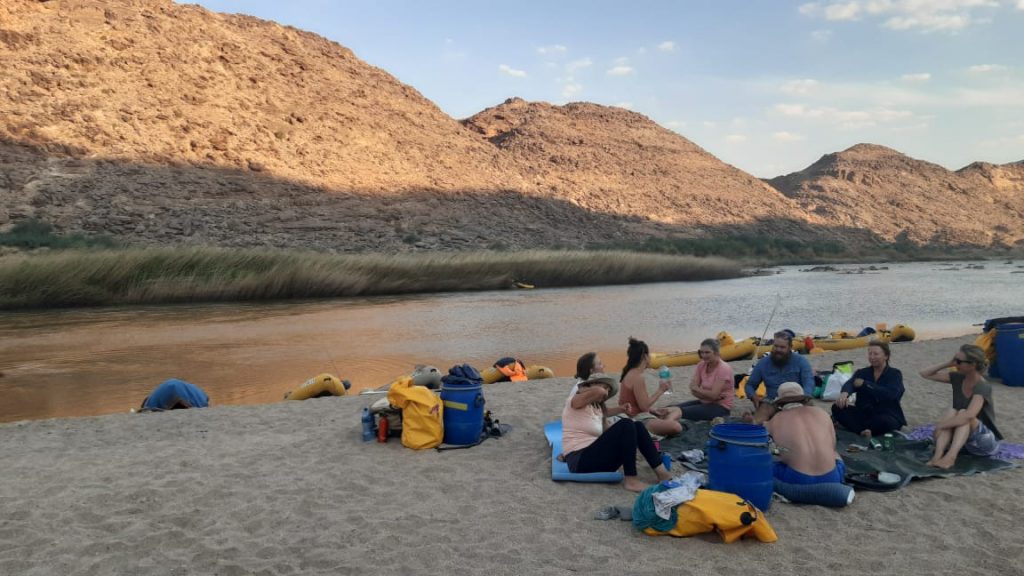
Camp that night was on a sand bank not far from our end point. As the day cooled we ate poitjie and pap prepared by the guides, had a last twilit swim in the murky river and went to sleep listening to the baboons barking on the other side of the river. It was a short paddle to the ‘put out’ point near Groot Klip. After some emotional farewells we drove back to Pofadder, but couldn’t face returning to real life too quickly. We spent the night just outside Springbok at Sperrgebiet Lodge, which I recommend for its quiet hilly surroundings and beautiful kokerboom trees.
I can’t wait for our next adventure, watch this space. A clue – the Wild Coast!


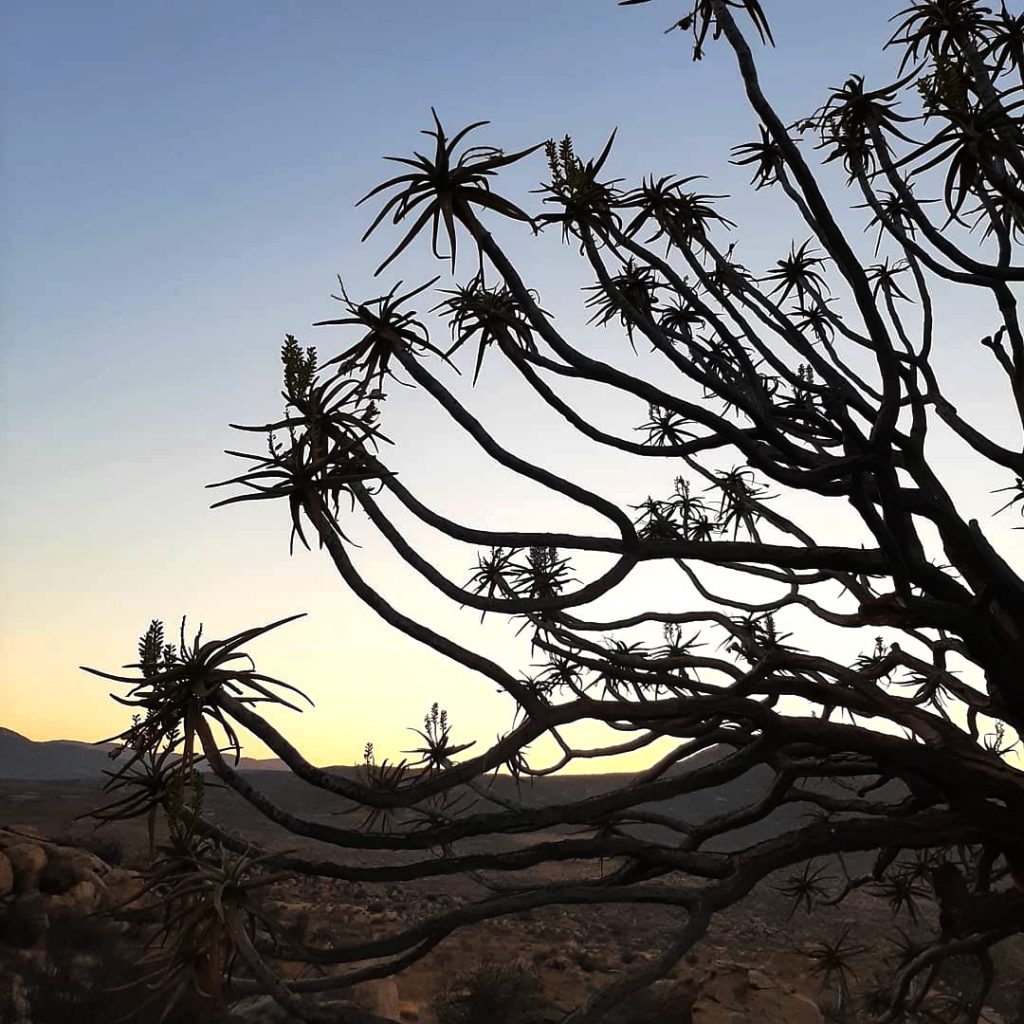

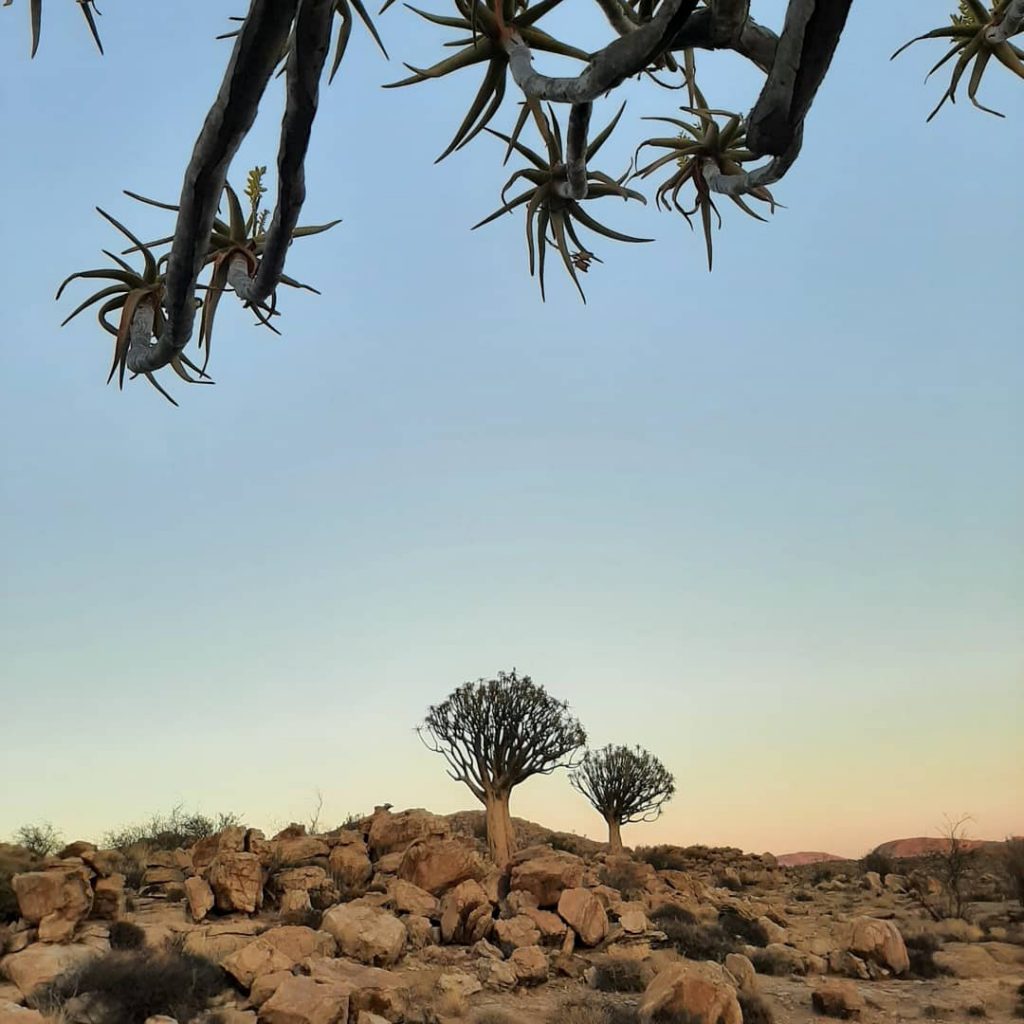
Kokerbooms Springbok